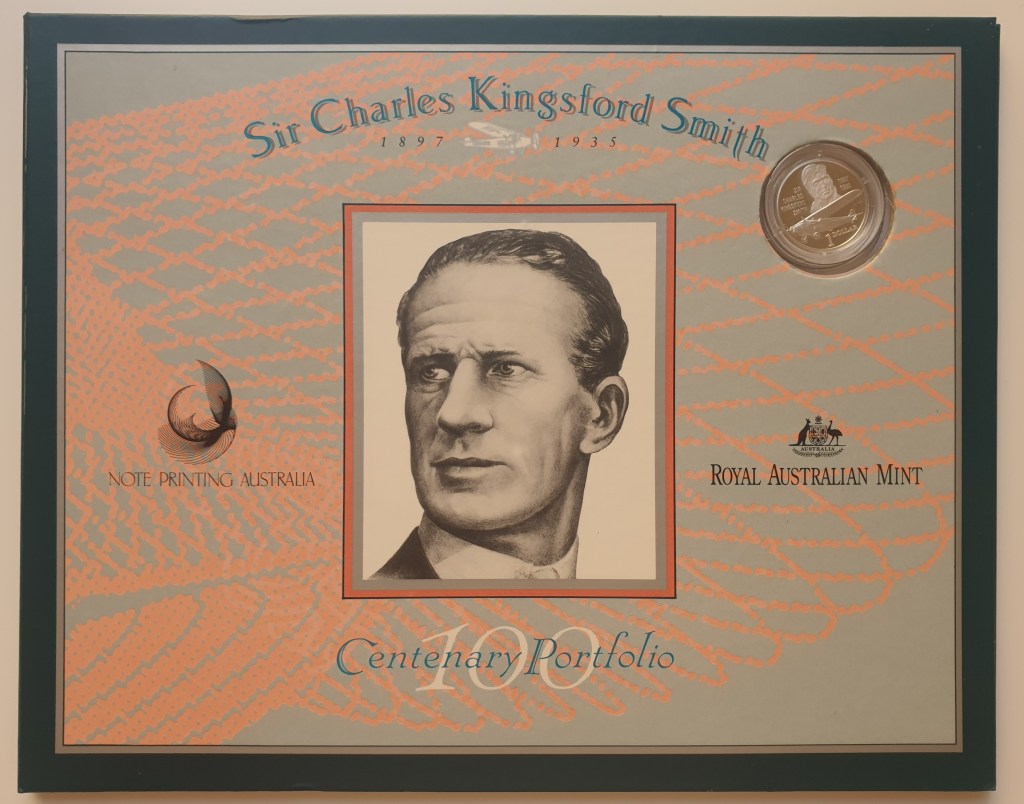
1997 Kingsford Smith Centenary Portfolio ($149+FV)
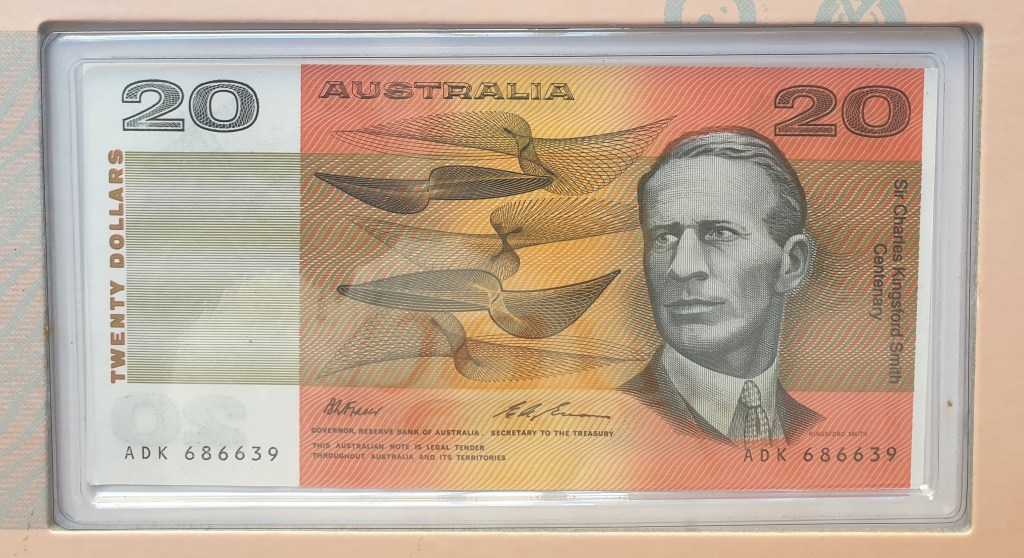
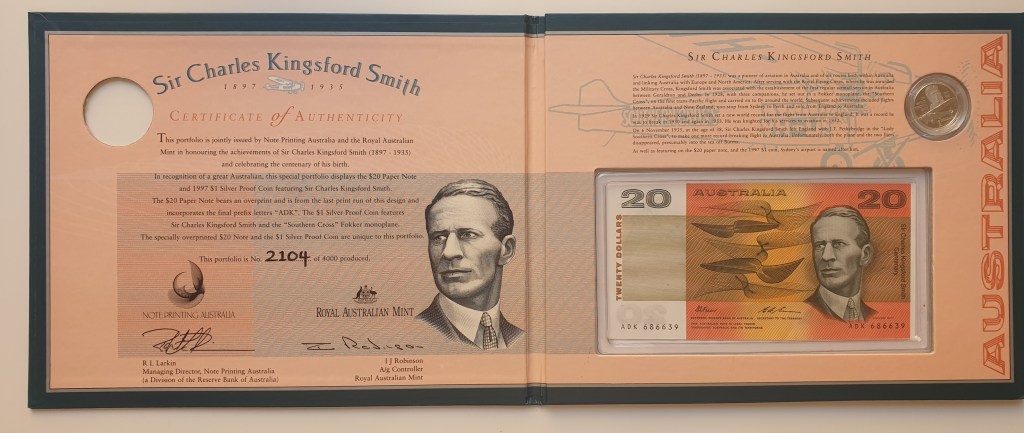
This portfolio celebrates the life of Kinsford Smith (1897-1935), Smith was a pionier of aviation and flew the first trans-pacific flight and world-wide voyage from Australia, connecting Australia to the US and Europe.
The portfolio contains a 1993 last Prefix (the last letters of the serial for that year) paper $20 note and a silver proof $1 1997 coin featuring Kingsford Smith.
I bought this in “Downies auction 337” for $170, it has a 4000 mintage.
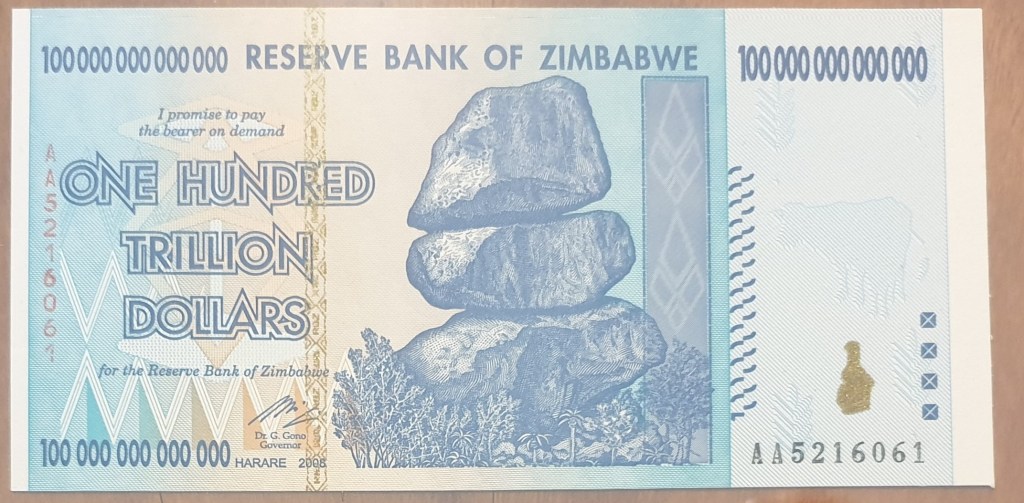
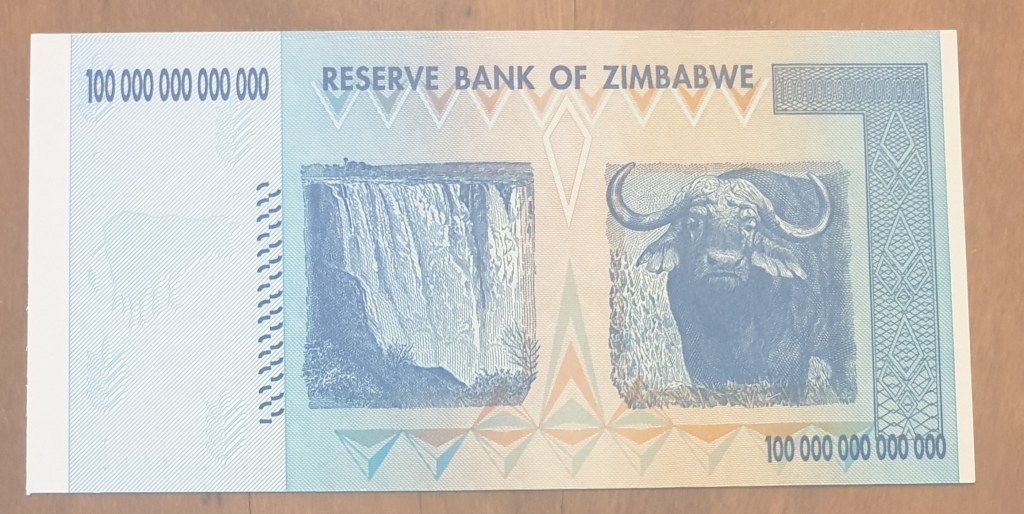
$100T, Zimbabwe 2008 ($125)
The Republic of Zimbabwe gained independence in 1980, from late 1990’s the then president Robert Mugabe introduced sweeping land reforms that aimed to remove white people from power by evicting them from their farms (a significant industry) and barring them from owning businesses while replacing them with inexperienced non-white owners.
These reforms along with significant sanctions from the western countries, corruption in the government and collapse of the country’s industries created a deep lack of faith in the value of the currency.
This lack of faith created significant inflation in the currency, leading to hyperinflation (>50% inflation per month) in March 2007 and culminating in the second highest monthly inflation in history at 4.19%*10^16/month. This is the equivalent of prices of common goods like bread, doubling every 15 hours.
This note is the outcome of this incredible inflation, the second highest denomination note in history and the highest denomination note by Zimbabwe, but ironically worth almost nothing.
I bought this note at a coin and stamp note fair in 2019 for $125.
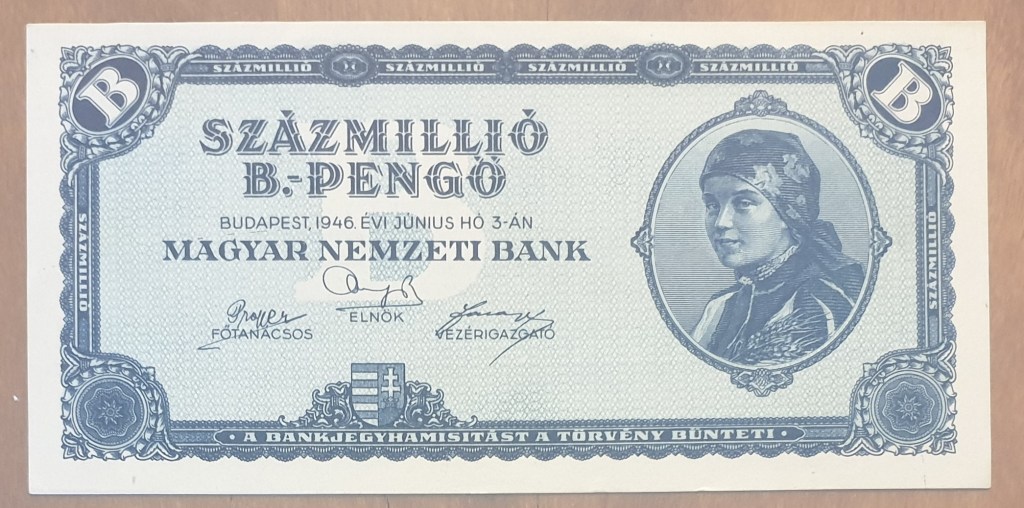
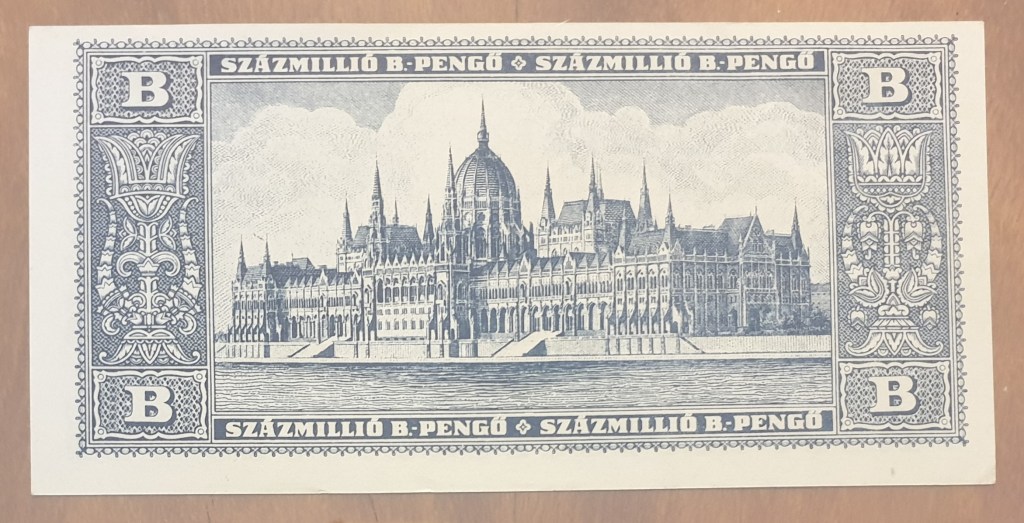
Szazmilio B.pengo, Hungry 1946, $10^26 Pengo ($95)
The Hungarian Pengo” currency was introduced in 1927 as a replacement to the Korona currency that had become highly inflated due to Hungary’s poor economy at the time.
The Pengo” was initially backed by gold and was the most stable currency in the world until Hitler took control of Hungary in 1944 where it was then devalued from the gold standard. During the war between the Soviets and the Nazis, Hungary was devastated and the value of the Pengo” began to go through inflation and then hyperinflation.
Hyperinflation (>50% inflation per month) of the Pengo” began in August 1945, reaching its peak in July 1946 at 4.19×10^26% inflation per month. That was the equivalent of 207% per day with prices of common goods doubling every 15 hours. This continued till August 1946, when the government introduced a new currency called the Forint, worth 400,000 Trillion Pengo. During the time of hyperinflation the government introduced 2 new denominations for notes, the MPengo” (1 Million Pengo”) and the BPengo” (The 1 Billion Pengo).
The note I purchased is the highest denomination circulated note at 100 Million BPengo”, or 100 Million Billion Pengo”. I purchased this for $95 at a coin and stamp fair. This is my most favorite note, reflecting the worst that can occur during economic mismanagement.
$100, Australia 2014, First Prefix ($70+FV)
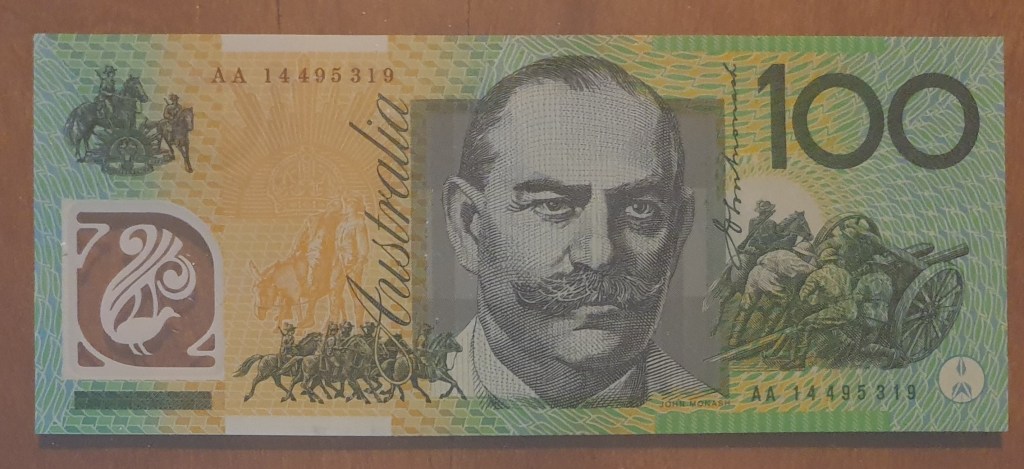
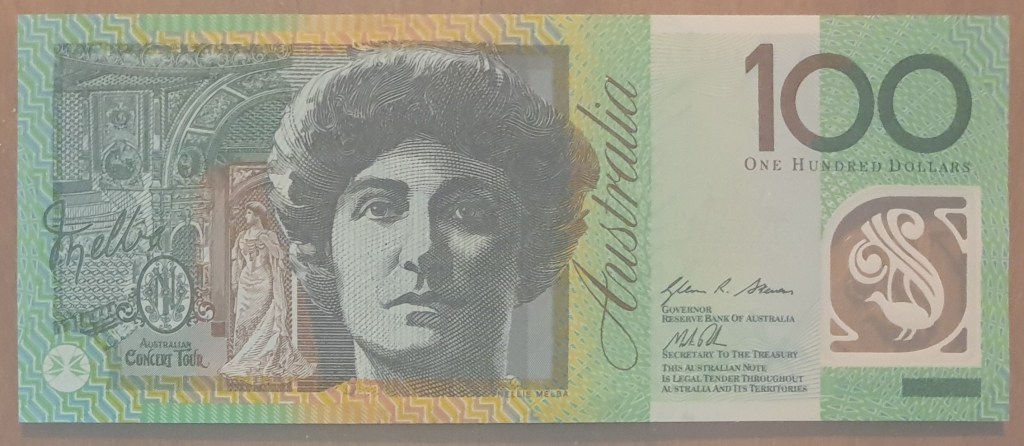
A first prefix note is one of the first set of notes for that year. It is denoted by the first lettering prefix in the serial that was printed for that year. Most modern Australian notes have a first prefix of “AA” but can be various other letters depending on how old the note is.
Being one of the first notes to be printed for that year or signature (for older notes), it entails a value higher then the face value of the note due to it’s uniqueness, who doesn’t like owning the first of something.
I bought 2 of these notes in “Downies auction 337” for $340, the last prefix for that year was “JC”, so the first prefix was a mintage of 999,999 out of a possible ~240M 2014 $100 notes.
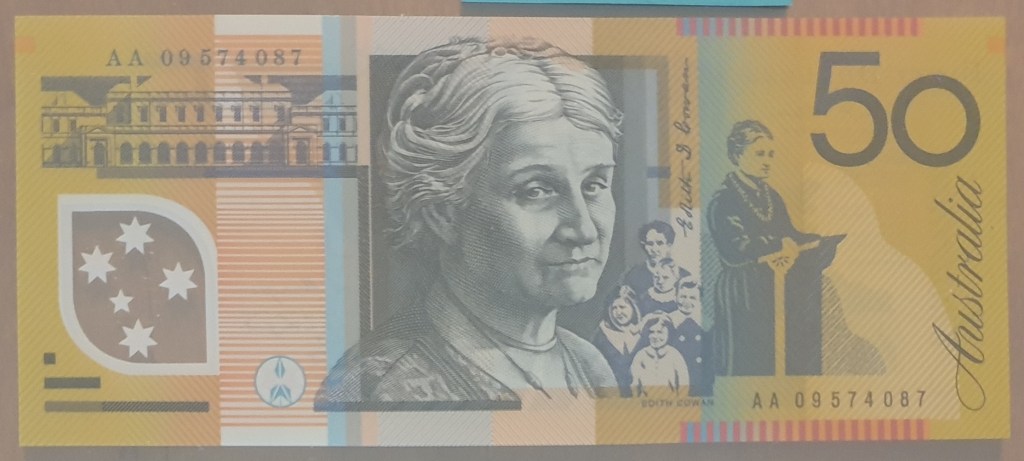
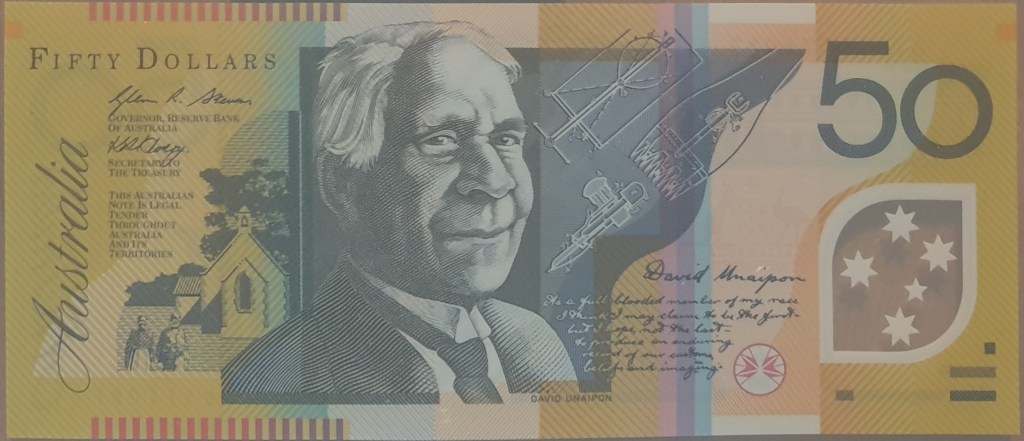
$50, Australia 2009, First Prefix ($70+FV)
Same as above, except instead a $50 2009.
The 2009 series had a last prefix of SF, giving a possible printage of ~456M notes. I bought this note in the “IAG auction 92”.